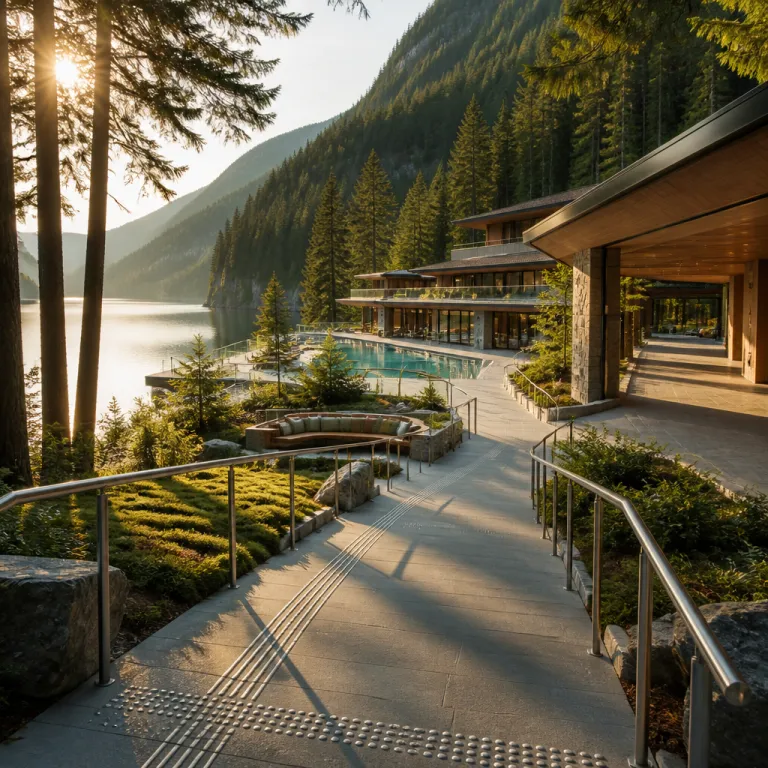
What barrier free luxury really means in Swiss alpine and city hotels
Barrier free luxury in Switzerland means more than a ramp beside a marble staircase. It means an accessible hotel where every step of the stay, from arrival by public transport to spa time and late check out, works seamlessly for wheelchair users and for travelers with less visible disabilities. In the best accessible luxury hotels Switzerland barrier free is treated as a design language, not a compliance checklist.
For a traveler based in Switzerland, the difference is immediately clear when public areas, corridors and upper floors are laid out so that people with disabilities move as intuitively as any other guests. Automatic doors, level thresholds and wide lifts are now common facilities in many high end hotels, yet true accessibility goes further, into room ergonomics, restaurant circulation and excursion planning. The most forward looking properties treat accessible travel as part of their identity, not a special request quietly handled in the back office.
Luxury accessibility starts at the entrance, where an easily accessible drop off point, clear signage and a step free lobby set the tone for the stay. Inside the rooms, you should expect roll in showers, grab rails that feel like part of the décor, and furniture that leaves generous turning circles for an accessible wheelchair or other mobility aids. When a hotel offers this level of accessibility as standard across several rooms and suites, rather than hiding one adapted unit at the back, it signals a completely barrier free mindset.
Hotel Centro Magliaso and the new benchmark for inclusive Swiss hospitality
Hotel Centro Magliaso on Lake Lugano has become a reference point for accessible hotels in Switzerland. Its win in the new accessibility category of the 101 Best Hotels awards underlined how a lakeside resort can be both relaxed and rigorously barrier free for accessible guests. The property shows how accessible luxury hotels Switzerland barrier free can feel quietly confident rather than clinical.
Across the grounds, paths are gently graded so wheelchair users and people with disabilities can move between rooms, dining spaces and the lake without facing a single unexpected step. Public areas are wide, shaded and clearly signed, which helps older guests and travelers with disabilities who may tire quickly or use mobility scooters. The hotel’s rooms include several fully adapted units, but even the standard categories show thoughtful accessibility features such as lever handles, generous showers and space for an accessible wheelchair beside the bed.
Centro Magliaso also illustrates how inclusive design benefits multi generational Swiss families extending a business trip into a lakeside stay. Grandparents, parents with strollers and children all share the same barrier free routes, while the hotel offers flexible meal times and accessible restaurants that work for different energy levels. If you are planning free travel by train to Ticino, the combination of nearby public transport and on site facilities makes this hotel a strong candidate for your next booking, especially when you compare it with newer openings highlighted in many summer hotel openings guides such as the curated overview of Swiss debuts on my-switzerland-stay.com.
From Zürich to the Bürgenstock: leading luxury hotels that get accessibility right
Several established Swiss luxury hotels now treat accessibility as part of their core brand, not a quiet footnote. In Zürich, The Dolder Grand offers accessible rooms and step free public areas, although some minor access issues remain around historic corners of the property. For a Swiss based traveler who values spa rituals as much as city views, this balance between heritage and accessibility can still make it a compelling accessible hotel choice.
Also on the Zürich lakeshore, the Ameron Zürich Bellerive au Lac has been designed with wheelchair accessible circulation in mind from the start, which shows in its wide corridors, level lobby and clearly signed public areas. Rooms with adapted bathrooms sit close to lifts, and the city center is easily accessible by tram, which matters if you rely on public transport for free travel with a Swiss Travel Pass. For many guests with disabilities, this combination of urban convenience and thoughtful room features can be more valuable than a slightly larger suite in less connected hotels.
High above Lake Lucerne, the Bürgenstock Resort uses integrated automatic door systems to create completely barrier free transitions between spa, restaurants and rooms. Here, accessible wheelchair routes are not hidden service corridors but the same panoramic walkways every guest enjoys, which is exactly how accessible travel should feel in a five star alpine setting. If you are planning an early summer wellness break, the resort sits comfortably alongside other spa focused properties featured in alpine wellness round ups such as the early season spa hotel guide on my-switzerland-stay.com, yet it stands out for the way it treats accessibility as part of the luxury promise.
Lucerne, Lugano and the quiet rise of barrier free alpine retreats
Lucerne has quietly become one of the most switzerland accessible cities for high end yet barrier free stays. Around the lake, several hotels now offer step free entrances, adapted rooms and accessible restaurants that work for wheelchair users and for people with sensory disabilities. When you combine these facilities with dense public transport connections, the city becomes a strong base for accessible travel into central Switzerland.
Within Lucerne itself, many hotels near the city center have upgraded public areas and upper floors to meet both building codes and rising guest expectations. You will increasingly find lifts that serve every level, breakfast rooms with flexible seating for accessible guests, and staff trained to support travelers with disabilities without fuss. For Swiss residents who know the city well, this shift changes the conversation from “Can I manage this hotel with my wheelchair ?” to “Which property offers the best balance of lake views, spa features and accessibility for my stay ?”.
Further south in Lugano, lakeside properties such as THE VIEW Lugano and Hotel Centro Magliaso show how hillside locations can still be easily accessible when design is thoughtful. Ramps, platform lifts and carefully graded paths ensure that people with disabilities reach terraces and pools without facing a single awkward barrier. If you are planning a weekend that mixes lake swimming with a drive into alpine valleys, these hotels offer a reassuringly accessible base, especially when combined with the lake by lake shoreline hotel guide on my-switzerland-stay.com for broader inspiration.
How to read between the lines of accessibility claims when booking
When you book accessible luxury hotels Switzerland barrier free, the website photos rarely tell the full story. Many hotels now state that they are wheelchair accessible, yet the reality on arrival can range from exemplary to frustrating. As a Swiss based traveler, you are close enough to call, email and ask precise questions before you commit to a non refundable rate.
Start with the basics : ask whether the entrance, reception, restaurants and spa are all on step free routes, and whether every public toilet includes at least one accessible cubicle. Clarify how many adapted rooms the hotel offers, on which floors, and whether those upper floors are served by lifts large enough for an accessible wheelchair and a companion. If you travel with people with disabilities who use different aids, request photos or short videos of the rooms and bathrooms, including the shower, toilet clearance and bed height.
Transport is the next filter, especially if you rely on free travel options linked to regional guest cards or a Swiss Travel Pass. Confirm how close the nearest accessible public transport stop is, whether the hotel can arrange a taxi with a ramp, and how staff handle arrivals for wheelchair users when the main drop off is on a slope. Finally, ask about less obvious features that affect comfort, such as contrasting floor surfaces for low vision guests, quiet rooms away from noisy public areas, and flexible breakfast times for travelers with disabilities who need more time in the morning.
Why barrier free design benefits every guest, not only people with disabilities
Swiss hoteliers are learning that accessibility is not a niche request but a quiet driver of loyalty and revenue. Aging baby boomers, parents with strollers and executives recovering from sports injuries all benefit from the same barrier free layouts that support wheelchair users. When a property invests in accessible travel infrastructure, it becomes more resilient to demographic change.
Think of a level, well lit corridor wide enough for two wheelchairs to pass comfortably. For people with disabilities, this is basic dignity ; for a family returning from the pool with pushchairs and bags, it simply feels like good design. The same applies to lifts that serve all upper floors, to restaurants with flexible seating for accessible guests, and to rooms where you can move a chair without blocking the route to the bathroom.
Even the idea of free accommodation for a carer, which some hotels quietly offer when a guest requires constant assistance, reflects a broader understanding of how people travel. A Swiss executive extending a business trip into a family stay may not need that policy, yet they will notice the calm, well trained équipe that comes with it. As more hotels position themselves as switzerland accessible destinations, the properties that treat accessibility as part of their luxury DNA will win repeat guests across generations.
Key figures on accessibility in Swiss luxury hotels
- According to the Swiss Hotel Association, an estimated 75 % of Swiss luxury hotels now include defined accessibility features such as adapted rooms, step free entrances or lifts serving all guest floors, showing how quickly the segment has moved beyond minimal compliance.
- A Tourism Board report from the middle of the decade recorded a 20 % increase in bookings from guests with disabilities at Swiss high end properties, reflecting both demographic change and better communication of accessible facilities.
- The 10th edition of the 101 Best Hotels awards introduced a dedicated accessibility category, signalling that barrier free design is now considered a core dimension of excellence alongside service and gastronomy.
- At the awards ceremony, a panel discussion on inclusive hospitality drew around 300 industry guests, indicating strong interest from general managers, architects and accessibility consultants in raising standards.
- Industry surveys suggest that older luxury travelers and multi generational family groups are driving much of the demand for accessible hotels, as they increasingly expect barrier free routes, accessible restaurants and flexible room configurations as part of a premium stay.
FAQ about accessible luxury hotels in Switzerland
Which Swiss luxury hotels are most accessible ?
Which Swiss luxury hotels are most accessible? Hotels like The Dolder Grand and Bürgenstock Resort are known for accessibility. In practice, this means adapted rooms, step free public areas and staff trained to support guests with different mobility needs.
Do these hotels offer accessible transportation ?
Do these hotels offer accessible transportation? Many provide accessible transport options; confirm with the hotel directly. When you book, ask about links to nearby public transport, ramp equipped taxis and support for wheelchair users at arrival.
Are spa facilities in these hotels accessible ?
Are spa facilities in these hotels accessible? Several have accessible spa facilities; inquire about specific features. Check whether pools have hoists or ramped entries, whether treatment rooms are on barrier free routes and whether changing areas work for people with disabilities.
How can I verify that a hotel is truly barrier free before I book ?
Start by requesting detailed information on room layouts, bathroom equipment and access to public areas such as restaurants, bars and terraces. Ask for recent photos or videos, and confirm that all key facilities, including upper floors and spa zones, are reachable without steps for an accessible wheelchair.
Why should I care about accessibility if no one in my group has disabilities ?
Barrier free design makes travel smoother for everyone, from parents with strollers to older relatives who tire on stairs. Choosing hotels that prioritise accessibility usually means better circulation, clearer signage and more flexible service, which improves the stay for all guests, not only people with disabilities.