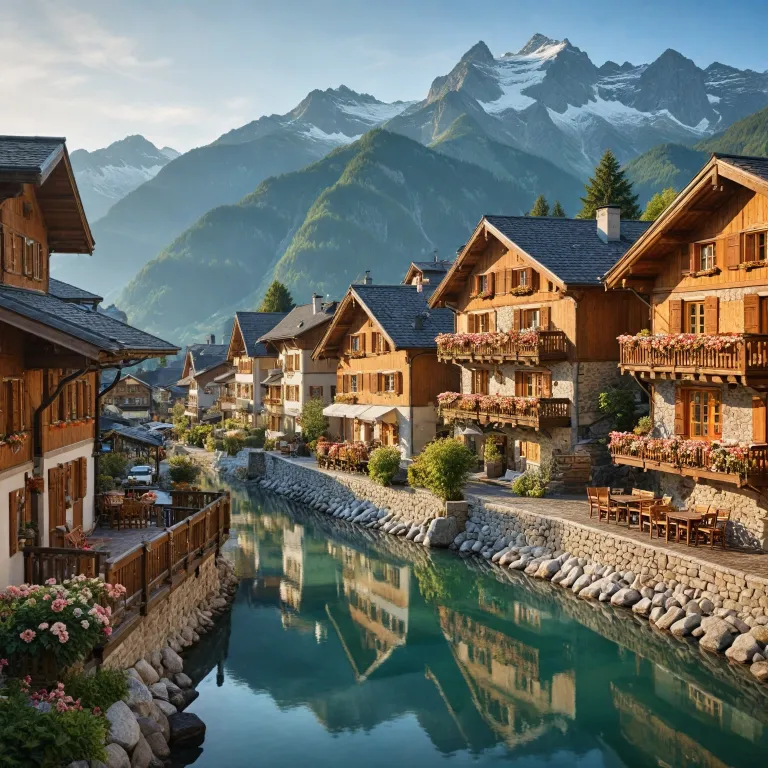
Choosing swiss mountain towns when you already live in Switzerland
Living in Switzerland gives you a rare advantage when planning a refined stay in swiss mountain towns. You can compare each town and mountain village in person, then decide which hotel or chalet style property truly suits your travel rhythm. This proximity lets you turn a simple weekend holiday into a carefully curated series of short stays across several alpine village destinations.
For a traveler based in Zürich or another swiss town, the question is not how to reach the swiss alps, but how to choose between them. The most beautiful options range from lakeside resorts above Lake Lucerne and Lake Thun to car free or traffic free retreats such as Wengen and Saas Fee, each offering different mountain views and levels of privacy. Because you can arrive by train for a quick day trip or longer stay, you can focus on service, spa quality, and room views rather than basic logistics.
Luxury and premium hotel booking platforms in Switzerland often treat international guests and local residents the same, which can feel limiting. As a swiss resident, you may want flexible cancellation for sudden weather changes in the alps, or last minute upgrades for spontaneous ski weekends. A more tailored approach would highlight swiss towns within two hours by train from Zürich, Bern, or Lausanne, and clearly show which mountain railway, cable car, or lake boat connections define each town or mountain village.
Understanding the character of key swiss mountain towns
Each of the most appealing swiss mountain towns has a distinct personality that should guide your hotel choice. Zermatt, Wengen, and Saas Fee are car free or effectively traffic free, which creates a quieter atmosphere and makes a luxury stay feel more exclusive. By contrast, places like Engelberg, Adelboden, and Sarnen balance easy car access with strong train connections, ideal for travelers who mix workdays in a swiss town with fast escapes to the mountains.
In the Bernese Oberland, Wengen and the wider Jungfrau region are classic choices for a premium holiday focused on mountain railway journeys and panoramic hiking. Wengen sits above the Lauterbrunnen valley, and many hotel terraces offer direct mountain views that change dramatically between summer hiking season and winter sports months. From the train station you can connect to the Jungfraujoch or Kleine Scheidegg, while cable car links and cog railways open up further alpine village excursions.
Further west, Adelboden and Albinen represent villages Switzerland is eager to protect for their traditional chalet style architecture and quiet stone alleys. Albinen is often cited as one of the best preserved swiss mountain villages, where larch houses and narrow paths create a strong sense of place. In central Switzerland, Engelberg and the Bürgenstock area above Lake Lucerne combine lake views, forest trails, and access to the Uri Alps, offering a different rhythm from high altitude ski resorts yet still firmly within the swiss alps.
Lakes, views, and access in luxury hotel decisions
For a swiss resident comparing premium hotels, the interplay between lake, mountain, and access often matters more than headline star ratings. Lakes such as Lake Lucerne, Lake Thun, and Lake Geneva frame some of the most beautiful swiss towns, where a hotel can offer both lake views and fast access to a nearby mountain railway or cable car. This dual setting allows you to combine gentle lakeside walks with more demanding hiking or ski days in the surrounding swiss alps.
Consider Sarnen on Lake Sarnen, close to both Engelberg and the Bürgenstock plateau, as an example of how a town can anchor several different experiences. You might book a refined hotel in Sarnen for a quiet stay, then use the train station to reach Engelberg for alpine hiking or Titlis excursions, or continue by train and boat toward Lake Lucerne resorts. In this way, one carefully chosen base in central Switzerland can unlock multiple swiss mountain towns and villages Switzerland promotes for sustainable tourism.
On the other hand, a car free or traffic free resort such as Zermatt, Wengen, or Saas Fee places you directly inside a mountain village environment, where every stay feels fully immersed in alpine life. Here, the absence of cars means luggage transfer, hotel shuttles, and proximity to the train station or cable car become critical booking details. A high end booking website serving swiss residents should therefore highlight walking distances, gradient, and elevator access, especially for guests arriving with ski equipment or planning frequent day trip outings.
Seasonality, hiking, and winter sports in swiss mountain towns
Because you live in Switzerland, you can treat swiss mountain towns as seasonal stages rather than once in a lifetime destinations. In summer, you may prioritise hiking routes, lake swimming, and long evenings on hotel terraces with open mountain views. In winter, the same town or mountain village becomes a base for ski days, winter sports, and spa focused stays that feel entirely different from your summer holiday experiences.
The Jungfrau region around Wengen is a prime example of this dual character, with flower lined hiking paths in the warmer months and extensive ski slopes in winter. Les Crosets in the Portes du Soleil area offers slopes suitable for beginners, as well as more challenging runs for advanced skiers, making it attractive for swiss families who return several times each season. Adelboden, with its alpine meadows and proximity to waterfalls, shifts from a hiking and trail running hub to a classic ski arena once the snow arrives.
Engelberg, framed by the Uri Alps and dominated by Titlis, offers glacier access and high altitude winter sports, yet also gentle valley walks and forest paths in summer. Saas Fee, another car free resort, is known for reliable snow and a compact alpine village layout that suits both short stays and longer holidays. A sophisticated booking platform should therefore allow swiss users to filter hotels not only by star rating and spa size, but by proximity to specific hiking trailheads, ski lifts, and mountain railway stations.
How swiss residents can use trains and cars intelligently
One of the quiet luxuries of living in Switzerland is the ability to reach most swiss mountain towns by train, often with seamless connections. For many swiss residents, the choice between train and car is less about cost and more about comfort, flexibility, and the type of stay they want in each mountain village. When a resort is car free or traffic free, such as Zermatt, Wengen, or Saas Fee, arriving by train usually feels more natural and aligns with the local atmosphere.
In regions like the Bernese Oberland, combining train and car can be particularly effective for a refined holiday. You might drive to a valley town with good parking, then continue by mountain railway into an alpine village where your hotel sits close to the train station or cable car. This approach reduces driving stress while preserving the freedom to explore nearby swiss towns, lakes, and viewpoints during a longer stay.
For central Switzerland, trains around Lake Lucerne and Lake Thun connect efficiently with boats, buses, and funiculars, making car free travel both realistic and pleasant. However, some villages Switzerland promotes for their authenticity, such as Albinen or smaller hamlets near Adelboden, may still be easier to reach by car, especially for short weekend breaks. A premium booking website aimed at swiss residents should therefore present precise access information, including last train times, parking options, and expected transfer times between the train station, hotel, and key cable car or ski lift stations.
What a truly swiss focused luxury booking experience should offer
The deep challenge for a luxury and premium hotel booking website in Switzerland is the lack of a category tailored to residents who already know swiss mountain towns. A traveler based in Zürich, Geneva, or another swiss town does not need generic descriptions of the swiss alps, but rather nuanced comparisons between similar mountain village options. They want to understand whether a chalet style suite in Wengen, a spa resort above Lake Lucerne, or a design forward hotel in Zermatt best suits a specific weekend or extended holiday.
To serve this audience, a platform should allow filters such as car free or traffic free status, distance from the train station, and guaranteed mountain views or lake views. It should highlight whether a property sits in an alpine village centre, on a quiet hillside, or directly beside Lake Thun, Lake Geneva, or Lake Lucerne. For swiss residents planning frequent day trip excursions, clear information about first and last mountain railway or cable car departures is as important as spa menus or room sizes.
Finally, the platform should integrate verified local data from municipalities such as Sarnen, Adelboden, Les Crosets, Bürgenstock, Engelberg, and Albinen, ensuring factual accuracy and trust. It should also reflect current trends toward sustainable tourism, authentic villages Switzerland wants to preserve, and responsible winter sports in sensitive areas of the swiss alps. By aligning its structure with how swiss residents actually travel, such a site would transform routine hotel searches into a refined, strategic way of planning stays across the most beautiful swiss towns and mountain villages.
Key figures about selected swiss mountain towns
- Population of Sarnen : 10 000 people, offering a sizeable lakeside town base close to the mountains.
- Elevation of Adelboden : 1 350 meters, positioning it as a classic Bernese Oberland resort for hiking and ski stays.
- Elevation of Les Crosets : 1 670 meters, giving this village strong snow reliability within the Portes du Soleil area.
- Elevation of Bürgenstock : 1 128 meters, combining lake and mountain views above Lake Lucerne with resort style hotels.
- Elevation of Engelberg : 1 020 meters, with higher peaks such as Titlis rising above for alpine and glacier activities.
- Population of Albinen : 250 people, underlining its character as an intimate, traditional swiss mountain village.
Questions travelers often ask about swiss mountain towns
What is the highest mountain in Engelberg ?
What is the highest mountain in Engelberg? The highest mountain in Engelberg is Titlis, with an elevation of 3,238 meters.
Is Les Crosets suitable for beginner skiers ?
Is Les Crosets suitable for beginner skiers? Yes, Les Crosets offers slopes suitable for beginners, as well as more challenging runs for advanced skiers.
What is the best time to visit Adelboden ?
What is the best time to visit Adelboden? Adelboden is popular both in winter for skiing and in summer for hiking, so the best time to visit depends on your preferred activities.